Can a Cat Get Feline Panleukopenia Again
What is Feline Panleukopenia Virus in Cats (Feline Distemper)?
Feline Panleukopenia Virus, otherwise known equally Feline Distemper, is a highly contagious, life-threatening infectious disease in cats. It mostly affects kittens and unvaccinated cats, and it tin be fatal if not accordingly diagnosed and treated. It is closely related to canine parvovirus (oft confused equally it is not related to the canine distemper virus).
The feline panleukopenia virus infects and kills the rapidly growing and dividing cells in the body, including cells in the bone marrow, intestines, and skin, and in a developing fetus.
The virus suppresses the production of all white blood cells in the bone marrow. These cells are important to the allowed organisation and are used to fight infection. Without them, the cat is vulnerable to spreading the virus.
Infected cells in the intestines eventually lead to diarrhea, decreased appetite and airsickness. Astringent dehydration ensues and the safety barrier between the intestines and the balance of the body breaks down, leading to secondary bacterial infections. The virus spreads quickly and is fatal, if left untreated.
Feline distemper virus is plant everywhere in the surroundings; it is strong and can live for years. The virus can survive in the environment it was shed into or be carried on shoes, paws, bedding, bowls, litter boxes, etc. It tin can survive at freezing temperatures and room temperatures, and it can also survive the apply of certain disinfectants, including iodine and booze.
The virus enters the body through the nose or mouth; the specific cat's immune system determines the number of viral particles that enter the torso. Usually, the virus invades the bone marrow and intestines within 2 to seven days of the cat coming into contact with the virus.
Panleukopenia is considered ane of the deadliest true cat diseases in the unvaccinated cat population. Kittens, cats with depressed allowed systems and meaning cats are at the highest chance to develop severe clinical signs of this disease.
Symptoms of Feline Panleukopenia Virus in Cats (Feline Distemper)
Symptoms of feline distemper can range from mild to astringent and may include the post-obit:
- Lethargy
- Depression
- Vomiting
- Diarrhea
- Painful abdomen (when touched or may appear tense and distended without touching)
- Dehydration
- Weight loss
- Rough or unkempt hair coat
- Fever
- Decreased to absent appetite
- Collapse (in severe cases)
- Bruising of the skin or gums (in severe cases)
Kittens infected with feline panleukopenia during early to mid-pregnancy may exist aborted. Kittens infected in the womb during the tardily stages of pregnancy may develop cerebellar hypoplasia once built-in, a condition where the virus affects the formation of a office of the brain chosen the cerebellum. This is the part that coordinates balance and movement.
Affected kittens will take mild to severe intention tremors and a wide-based opinion. They may fall frequently or seem uncoordinated. Luckily, this is non considered a painful status, and these special-need kittens, if kept in safe environments, can live long happy lives.
Causes of Feline Panleukopenia Virus in Cats (Feline Distemper)
Cats become infected with this virus in utero due to their mother condign infected while pregnant or being exposed to it in their surround. Kittens can likewise be infected in utero or via breast milk when feeding from their female parent.
A cat carrying feline distemper virus will shed viral particles into the environment through carrion, urine, saliva and vomit. Infection occurs when susceptible cats are in contact with these secretions.
Luckily, an infected true cat merely sheds the virus for a solar day or two, merely since the virus is very stable in the environment, it can live for years. That is why it is common for cats to become infected due to their environment.
How Veterinarians Diagnose Feline Panleukopenia Virus in Cats (Feline Distemper)
Feline panleukopenia can wait similar many other conditions, such equally feline leukemia or feline immunodeficiency virus. Whatever kitten showing signs of fever, vomiting, diarrhea, depression, and a decreased appetite is a feline panleukopenia suspect. A thorough medical history tin can be helpful with diagnosis, especially if your cat was recently adopted, has been outdoors frequently, is unvaccinated, and/or has been around other cats.
Your veterinarian volition likely do bloodwork to aid with the diagnosis. Feline panleukopenia is suspected when exposure history is correlated with very depression white blood cells and possibly low crimson claret cells (anemia).
Fecal testing for feline panleukopenia virus can be performed but is oftentimes falsely positive if the cat received a panleukopenia vaccine 5-12 days prior to testing. Virus isolation (a test to find the virus in different tissue samples), antibody levels and PCR testing are also available to assist confirm suspicions of feline panleukopenia.
Treatment of Feline Panleukopenia Virus in Cats (Feline Distemper)
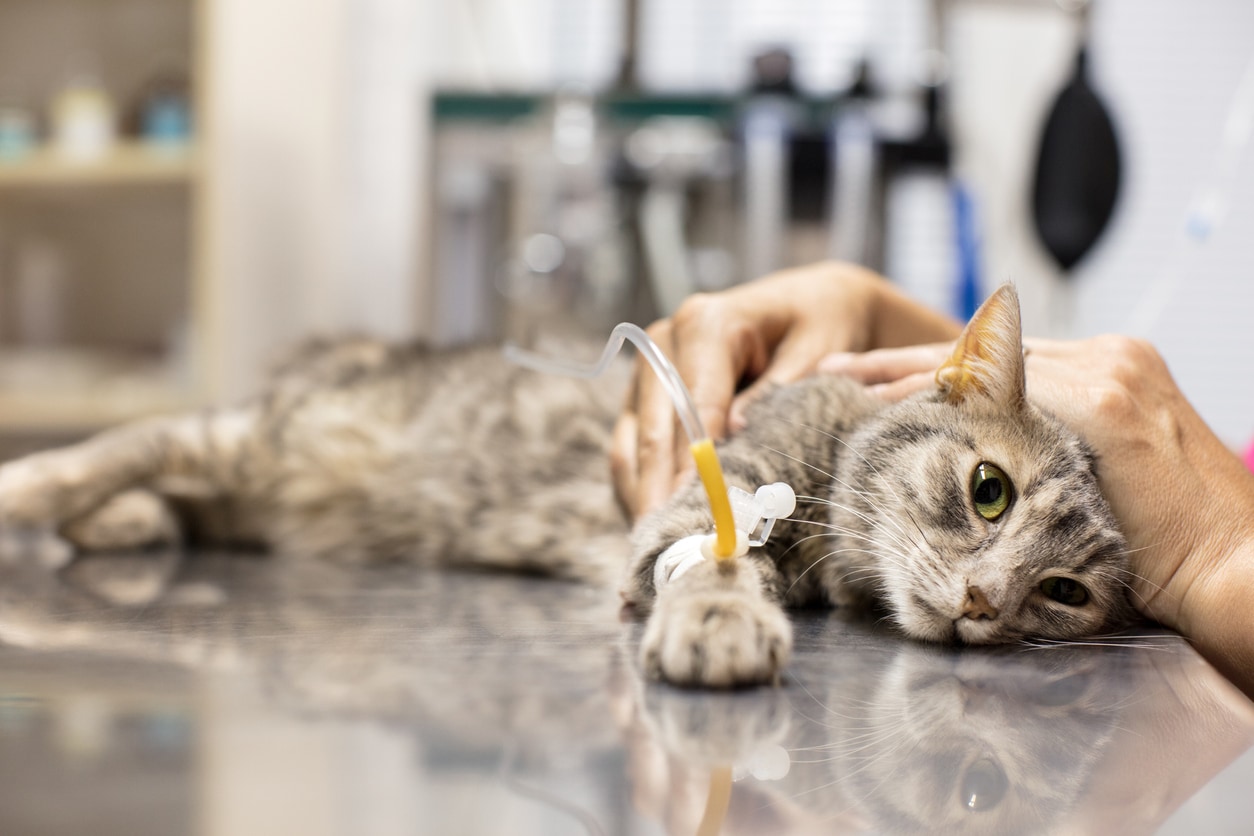
There is no specific treatment for feline panleukopenia. Dehydration is treated with aggressive intravenous fluid therapy while clinical signs of vomiting and diarrhea are treated with prescription medications.
Antibody therapy is often instituted to help control any secondary bacterial infections due to depression white blood jail cell counts. Yet, antibiotics are not used to care for and clear the actual virus. For kittens and cats who appear in shock, or with severe infections, ambitious therapy and nursing intendance is necessary for resuscitation, using plasma/blood transfusions and anti-coagulant therapies.
Luckily, cats who practise receive and respond well to aggressive therapy during the starting time few days of feline panleukopenia tend to take a proficient prognosis for a complete recovery. Kittens infected in utero during the early to middle stages of pregnancy typically do non survive. Those infected in the later stages of pregnancy tend to develop cerebellar hypoplasia but can live happy lives with normal survival times, depending on the severity of the neurological signs.
Prognosis decreases for cats with depression protein levels, low temperatures, thin body conditions, and/or severely low white blood cells on bloodwork. These extremely sick cats take a poor prognosis and, on average, will pass away within 12-24 hours.
If a cat recovers from feline panleukopenia, there is usually no permanent damage to their organs, and they develop lifelong immunity to the virus.
Recovery and Management of Feline Panleukopenia Virus in Cats (Feline Distemper)
Luckily, there is a vaccine for feline panleukopenia virus, and it is part of the core vaccine series for cats. This vaccine is so effective that a cat often requires only 1 dose for lifelong immunity, though it is nevertheless recommended to be administered as a series with other core vaccines.
Most vaccine protocols recommend at least 2 doses given two to four weeks apart, with the last vaccination received when the true cat is xiv-16 weeks sometime. This vaccination is normally repeated every one to 3 years, depending on your true cat's lifestyle and the protocols set by your veterinarian. Hash out vaccination with your veterinary for more details and recommendations.
Since feline panleukopenia is hardy and can remain in the affected environment for a long fourth dimension, all cages, food/water bowls, toys and bedding should exist replaced or thoroughly disinfected. This virus can alive on the hands and clothing of humans who encounter it, and then washing your hands with soap and water later treatment an infected true cat minimizes transmission to other cats.
To ensure safety, unvaccinated cats should not be placed in an environment frequented by a cat with suspected feline panleukopenia.
Feline Panleukopenia Virus in Cats (Feline Distemper) FAQs
Is feline panleukopenia the same as feline distemper?
Yeah, veterinarians use these terms interchangeably, though feline distemper is incorrect since feline panleukopenia is actually caused past feline parvovirus.
What are signs of feline distemper?
Clinical signs of feline distemper include diarrhea (with or without blood), depression, lethargy, dehydration, painful abdomen, airsickness, or in more than severe cases, plummet or fifty-fifty expiry.
Tin can cat distemper exist cured?
Yeah, lifelong immunity develops if the cat is treated in the initial stages of infection and responds well to therapies.
Tin a cat survive panleukopenia?
Yes, if treated in the initial stages of the infection.
Is feline distemper contagious?
Feline distemper is extremely contagious, both from other infected cats, humans who have encountered infected cats, and/or the surroundings. It is non contagious from cats to humans, only from cat to cat.
Source: https://www.petmd.com/cat/conditions/infectious-parasitic/c_ct_feline_panleukopenia
0 Response to "Can a Cat Get Feline Panleukopenia Again"
Post a Comment